daring cooks sushi challenge
•November 14, 2009 • 14 Comments

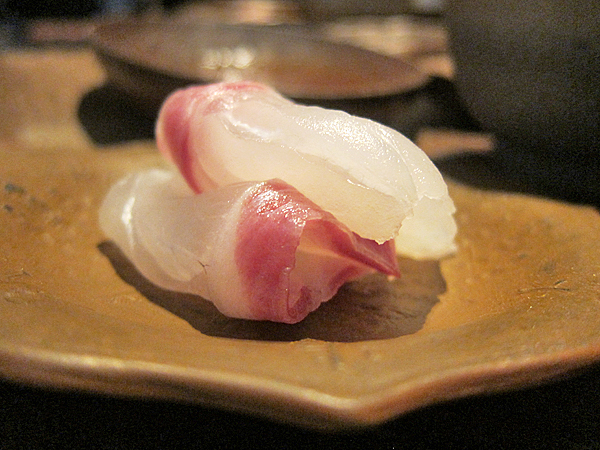
unagi, salmon and mackerel nigiri

I joined the Daring Kitchen family last month and was excited to tackle my first Daring Cooks challenge hosted by Audax (Audax Artifex) and Rose (The Bite Me Kitchen). Their sushi challenge was rather appropriate for me seeing as in the summer I never go a week without eating sushi. However I always eat it out and have never attempted making it myself at home. The challenge required us to make sushi rice from scratch, then shape it into three types of sushi: Nigiri, Spiral Rolls and Dragon Rolls. Making the sushi rice was surprisingly easy, although turning out neat and presentable rolls was trickier and required a few tries. One tip I would give is to constantly wet your fingers when working with the rice or you’ll end up with more rice on your fingers than on the nori! Audaz and Rose’s detailed instructions were fantastic but lengthy, so I’ve abbreviated them below (hopefully they are still clear enough to follow).

Sushi Rice
(makes approximately 7 cups)

2 cups short grain rice
2 cups water
3 inch square konbu (dried kelp seaweed)
2 tsp sake
5 tbsp rice vinegar
5 tbsp sugar
1 tsp salt

Wash the rice by swirling gently with your hand in a large bowl of water. Drain, then repeat 3-4 times until water is almost clear. Pour into a strainer and drain well for 30 minutes.

Place rice into a heavy medium pot with a tight fitting lid, then add the water and konbu (wipe first with a damp cloth to remove the white powder and score with a knife to help release its flavour). Leave to soak and infuse for 30 minutes.

In the meantime prepare the sushi rice dressing. Combine the rice vinegar, sugar and salt in a small saucepan and heat on low until the sugar has dissolved. Remove from heat and set aside.

When the rice is ready, add the sake and bring to a boil. Reduce the heat and simmer gently, covered, for 12-15 minutes until all the water is absorbed. Do not remove the lid while it is cooking. Turn off heat and leave to stand (still covered) for another 10-15 minutes. The steaming completes the cooking process so don’t be tempted to lift the lid off at this point.

When the rice has rested for long enough gently turn it out onto a large non-metallic (plastic, glass or wood) bowl or deep tray, taking care not to crush the grains of rice. Remove the konbu, then slowly pour the cooled sushi vinegar over a flat thin wooden spatula or spoon onto the hot rice.

Carefully spread the rice into a thin, even layer using a 45° cutting action to break up any lumps and separate the rice. Do not stir or mash rice. Once spread out, start turning it over gently, in small portions, using a cutting action, allowing steam to escape, for about a minute.

Continue turning over the rice, but now start fanning (with a piece of stiff cardboard) the rice vigorously as you do so. Continue fan while gently slicing, lifting and turning the rice occasionally for 10 minutes.

You can stop fanning when there is no longer visible steam from the rice. The rice should have taken on a glossy sheen and all the vinegar dressing absorbed by the rice.

If you aren’t working with the rice immediately, cover it with a damp, lint free cloth to prevent it from drying out. Sushi rice is best used when it is at room temperature and must be used on the day. Do not place it in the fridge as the rice will harden and be unpleasant to eat.

spicy tuna spiral sushi

Spiral Rolls
makes 1 roll (cut into 8 pieces)

2 cups prepared sushi rice
2 sheets of toasted nori, each 7”x8” (17.5cmx20cm)
a selection of fillings (I used tuna sashimi, avocado, cucumber, japanese mayo and togarashi)

Join the sheets of nori by moistening the adjacent edges and overlapping them about 1/2 inch (12mm). Place the joined sheet shiny side down on a rolling mat, part of the nori will extend beyond the mat.

Moisten your fingers, then place the rice onto the nori, gently raking your fingertips across the grains to spread evenly, leaving 1/3 inch (6mm) of nori showing on the both ends of the sheet. Don’t press the rice onto the nori, the rice should be loosely packed (it’s fine if you can see the nori through the rice in parts) but evenly distributed over the entire sheet.

Use your fingers to form six grooves (in the same direction that you will be rolling the mat) at even intervals across the bed of rice. Make the first groove about 2 inches (50 mm) from the edge of the nori sheet. Form the grooves by pushing the rice away, do not mash or squash the rice, leave a loose one grain layer of rice in the bottom of the grooves. Level the areas between the grooves where you have pushed the rice.

Place your fillings in the grooves. Fill the grooves a little higher than the surrounding rice bed. Then roll the sushi up from the edge closest to you, this will form a spiral pattern of nori, rice and fillings inside the roll.

Slice into 8 pieces with a very sharp wet knife, wiping the blade with a damp cloth after each cut. Serve with pickled ginger, wasabi and soy for dipping.

dragon roll

Dragon (or Caterpillar) Rolls
makes 2 rolls

2 cups prepared sushi rice
1 sheet 7”x8” (17.5cmx20cm) of toasted nori, halved
1/2 japanese cucumber, or normal cucumber with the inner soft, seeded flesh discarded
100g (3oz) unagi (glazed barbecued eel)
1 avocado

Cut the cucumber into 1/3 inch (6mm) x 7 inch (175mm) strips, then salt, rinse and dry with kitchen towel.

Warm the eel by either boiling in the plastic packaging for 10 minutes (if of the frozen, vacumn-packed variety) or grill for about 2-5 minutes until bubbling. Cut into two lengthwise strips.

Halve, pit and peel the avocado. Cut the avocado halves into thin even 1/8 inch (3 mm) slices. Fan the slices out into a 7 inch (175 mm) overlapping pattern.

Cover bamboo mat with plastic wrap. Place a sheet of nori shiny side down, lengthwise, on the edge the mat.

Moisten your hands with water, then place one cup of rice on the nori and gently rake your fingertips across grains to spread rice evenly. Do not mash or squash the rice onto the nori, the rice should appear loosely packed and be evenly distributed over the entire sheet, you should be able to see the nori sheet in a few places.

Flip the rice-covered nori over (so the bare nori is now on top) and place on the edge of the mat closest to you. Arrange one of the eel strips across the length of the nori, about a third of the sheet away from you. Place half the cucumber sticks next to the eel.

Lift the edge of the mat closest to you with both hands, keeping your fingertips over the fillings, and roll the mat and its contents until the edge of the mat touches straight down on the nori, enclosing the fillings completely. Lift up the edge of the mat you’re holding, and continue rolling the inside-out roll away from you until it’s sealed. Tug at the mat to tighten the seal. If the rice doesn’t quite close the roll add more rice in the gap and re-roll using the mat to completely cover the inside-out roll.

Slide a knife under one fan of avocado and transfer it onto the top of an inside-out roll. Gently spread out the avocado layer to neatly cover the entire roll. Lay the plastic wrapped mat over the avocado-covered roll. Squeeze very gently to shape the roll.

Lay a sheet of plastic wrap over the roll. Slice the roll into 6-8 equal pieces, wiping your knife with a damp towel before each slice. Discard the plastic wrap. Repeat the above to make one more roll.

Arrange the cut pieces on a serving plate, using soy sauce, unagi sauce and/or japanese mayonnaise to create legs and flames for your dragon. Serve with pickled ginger, wasabi and soy for dipping.

Nigiri Sushi (picture at top of post)
makes 16 pieces of sushi

2 cups prepared sushi rice
8 pairs of assorted toppings – about 200 gm (7oz) of sashimi-grade fish
(you can also use cooked fish, meat and/or vegetables)
1 tbsp wasabi (optional)

Moisten your hands with water, then scoop up a small amount (about 2 tbsp) of rice with your forefinger and second finger of your right hand and placing it in your cupped left palm.

Use the fingers and thumb of your right hand to form it into a long, narrow loaf (about 2″ x 1″) in your cupped palm, and press gently, but firmly to make the rice hold together.

Place the nigiri on a damp cutting board flat side down. Don’t let sushi touch or they’ll stick to each other. At this point, you can cover the sushi with plastic wrap, and they’ll keep at room temperature for several hours.

If using the wasabi, dab a small amount on top of the rice and place your topping on it. You may need to press the topping down lightly with your fingers and adjust the shape of the rice accordingly to form an attractive piece of nigiri sushi.

I have made simple nigiri with just sashimi as a topping but if you choose a loose topping like fish roe, you can place a strip of nori (higher than the rice) around the nigiri and form gunkan (or ‘battleship’) sushi. The cavity that the nori forms holds the topping so it does not fall off. You may also wish to garnish with strips of nori (or vegetables) to tie the topping to the nigiri.

Serve your pairs of sushi with pickled ginger and soy for dipping.

Japanese Rice on Foodista Homemade Sushi on Foodista Dragon Roll on Foodista

lemon crème fraîche loaf cake

•November 12, 2009 • 8 Comments

lemon and crème fraîche cake

I like a sinful chocolate dessert as much as the next girl, but when it comes to cakes my heart belongs to tea cakes. Victoria sponge, banana bread, lemon poppyseed cake…a slice of any of these and a pot of tea never fails to brighten my day. This light-as-a-cloud lemon loaf cake is bright, citrusy and incredibly moist (thanks to the addition of crème fraîche) – a perfect cake for afternoon tea. At less than 15 minutes to put together (I timed it!) and just under an hour to bake, this will become a family teatime staple in no time!

Lemon Crème Fraîche Loaf Cake

140g (5oz) plain flour
55g (2oz) unsalted butter, cut into small cubes
150g (6 tbsp) crème fraîche (or sour cream)
155g (5.5oz) caster sugar
1/2 tsp baking powder
1/4 tsp baking soda
grated zest of one lemon
juice of one lemon
3 small eggs

Remove your butter, eggs and crème fraîche from the fridge and allow to come to room temperature before you begin.

Preheat the oven to 180°C (356°F).

Sift the flour, baking powder and baking soda into a bowl, stir in the lemon zest and set aside.

In a large mixing bowl mix the eggs and sugar with an electric whisk on a high speed for about 5 minutes, until light and frothy. Add the cubed butter and continue mixing on medium, until incorporated (a few small lumps here and there is fine). Turn the whisk down to low and add the crème fraîche, mix briefly until it all comes together.

Add in a third of the dry ingredients and mix on low until just combined (this should take a matter of seconds – you want to refrain from overworking the batter with each addition of the flour to ensure your cake comes out nice and light). Add another third of the dry mixture, then the lemon juice and whisk gently again, repeat with the remaining flour mixture.

Pour the cake batter into a buttered, lined loaf tin and bake in the preheated oven for 45-50 minutes. When ready the cake should be lightly golden on top and a knife or skewer should come out of the cake clean.

Remove from the oven and leave to cool for 10-15 minutes. When cool enough to handle, turn the cake out of the tin onto a cooling rack and leave until it has cooled completely or if you can’t resist, have yourself a cheeky slice (I personally think it’s divine warm).

Lemons on Foodista  Crème Fraîche on Foodista

stuffed round courgettes

•November 11, 2009 • 6 Comments

round courgettes ready for stuffing

Round courgettes look so beautiful that it’d be a real waste if you were to chop them up and throw them in a casserole. I like to keep their natural shape by stuffing them – they make great vessels when hollowed out and look so pretty on the plate. Here I have stuffed them with red onion and bacon, which adds a lovely savory note and smokiness to the sweet courgettes. Next time you entertain instead of regular sides of steamed spinach or roast potatoes, give these beauties a whirl – you’ll be sure to impress with not only how stunning they look, but also how wonderful they taste.

Stuffed Round Courgettes
serves 4 as a side

4 round courgettes
2 rashers streaky bacon, chopped
1 red onion, chopped
2 cloves garlic, minced
2 tbsp freshly grated parmesan, plus extra to finish
1 tbsp olive oil
freshly ground black pepper
sea salt

Preheat the oven to 180°C (356°F).

Wash the courgettes and pat dry. Cut off the tops, then using a teaspoon scoop out the flesh until you’re left with a hollow “bowl” (see photo above). Reserve the scooped out flesh. Brush some olive oil in the courgette cavities and skin then season with salt and pepper. Place on a baking tray, pop the tops back on (like lids) and bake for 30 minutes.

While the courgette shells are cooking make the filling. Heat the olive oil in a small pan on a medium-high heat and fry the onions, bacon and garlic for 3-4 minutes, until golden and fragrant. Remove and set aside.

In the same pan fry the courgette flesh for 6-8 minutes, until softened (if the pieces are quite large use a spoon to break it down) and slightly coloured. Return the onion and bacon mixture back into the pan and combine. Take off heat and add the parmesan. Taste and season.

When the courgette shells are ready, remove from the oven and turn upside down on some paper towels and leave for 5 minutes to remove any excess moisture.

Fill the courgette shells with the stuffing then grate over a generous amount of parmesan. Finish off under a hot grill for a few minutes until the parmesan has browned and melted.

Serve with the tops popped back on, as a side to some protein or as a main (you’ll need about 3 courgettes per person) with a salad.

stuffed round courgettes

Courgette on Foodista

bacon and mushroom baked rice

•November 10, 2009 • 3 Comments

mushroom and bacon baked rice

I am forever recycling leftovers by making fried rice for lunch the next day – especially now that the weather has turned and it’s too cold for salads and sandwiches. I decided to put in a little more effort today and made a parmesan and cream sauce topped baked rice. It may seem odd to include cheese and cream in what is essentially an oriental dish, but this kind of pseudo-western dish is very popular in HK and personally I think it works rather well (although B may beg to differ). Rich and somewhat indulgent, this comforting dish takes your everyday fried rice up a notch with not much extra work at all.

Bacon and Mushroom Baked Rice
serves 2

2 cups cold cooked rice
4 rashers streaky bacon, chopped
10-12 white mushrooms, sliced
1 small onion, chopped
2 cloves garlic, minced
1 tbsp butter
1 egg, beaten
90ml (6 tbsp) water
1 tsp chicken stock powder
2 tbsp single or double cream
freshly grated parmesan
1 tsp cornflour
1 tsp soy sauce
freshly ground black pepper
salt

Preheat the oven to 200°C (392°F).

First make your sauce. In a small saucepan heat the water, stock powder (you can also just use 90ml of stock instead of water and omit the stock powder) and cream and gently simmer for a few minutes. Combine the cornflour with a tbsp water, then add to the sauce to thicken. Keep warm.

Melt the butter in a hot pan or wok and fry the onions with the garlic for a couple of minutes until they appear translucent. add the bacon and fry until it is golden, then add the mushrooms. Once the mushrooms have also coloured, taste and season.

Add the cold rice to the pan, breaking up any clumps with a spoon. Toss the ingredients together until it is well combined and the rice is heated through. Push the rice to one side of the pan then pour in the beaten egg, stirring until almost set, then mix in with the rice, together with the soy sauce.

Spoon the fried rice into a oven proof dish and top with the cream sauce. Grate over a generous amount of fresh parmesan then bake in the oven for 10-12 minutes until the cheese is melted and golden.

Bacon on Foodista  Mushrooms on Foodista

rabbit stew with tomato

•November 10, 2009 • 9 Comments

rabbit stew

I came across this rustic stew while leafing through the new River Cottage cookbook. I had never cooked rabbit before and this recipe looked so straight forward, I decided to give it a go. After a bit of chopping, slicing and browning the rabbit is left to slowly cook and mingle with the other ingredients in a low oven. It came out really moist and tender despite being extremely lean, and the tomato based sauce was lovely spooned over the meat and some mashed potatoes. The rabbit was however a little scrawny, with not much meat on it – at £10 a pop you’d be better off making the stew with chicken if you’re cooking for a large group, I think would come out just as good (if not better). For those of you who are more adventurous, the cookbook recommends a substitute of grey squirrels (I’ll stick to rabbit or chicken thanks).

Rabbit Stew with Tomato
(adapted from River Cottage Everyday)
serves 2

1 rabbit, jointed
2 tbsp olive oil
4 rashers streaky bacon
2 carrots, sliced
2 celery stalks, sliced
1 onion, sliced
2 bay leaves
4-5 sprigs thyme
2 cloves garlic, chopped
5 whole black peppercorns
500g (1lb) tomatoes, skinned, deseeded and chopped
1 x 400g (280oz) tin chopped tomatoes
1/2 cup white wine
1 tbsp butter
1 tbsp flour
freshly ground black pepper
sea salt
2 bay leaves

Preheat the oven to 140°C (275°F).

Season the rabbit pieces generously with salt and pepper. Heat the olive oil in a large cast iron pot (dutch oven) on a medium-high heat and add the bacon, cooking until brown. Add the rabbit and cook until nicely coloured on all sides. Remove the rabbit from the pan and set aside.

To the same pot add the onions, carrots and celery, cooking until they have coloured a little (add a sprinkling of water if the vegetables start to stick to the pot). Add the garlic, bay leaves, thyme and peppercorns, and return the rabbit pieces to the pot.

Deglaze with the wine then throw in the fresh and tinned tomatoes, giving everything a good stir. Add enough water to just cover the rabbit and bring to a slow simmer.

Cut a piece of greaseproof paper into a circle the diameter of your pot and place directly on top of the stew. Put the pot in the oven to gently cook for 1 1/2 hours.

Take the pot out of the oven and remove the bay and thyme. Pick out the rabbit pieces and set aside in a warm place. Strain the sauce (if you prefer a more rustic dish you can forgo this and leave the vegetables in) and put back on the stove to reduce.

Mash the flour and butter together to form a paste and add to the sauce to thicken. once the desired consistency is reached, stop cooking and season to taste.

Serve the stew with fluffy mashed potatoes and steamed greens.

Wild Rabbit on Foodista

st. john bar & restaurant

•November 9, 2009 • Leave a Comment

There aren’t many serious foodies who have not heard of St. John, the restaurant made famous by former head chef and champion of nose-to-tail eating, Fergus Henderson. Favoured by chefs, critics and punters alike for its good honest British cooking, it currently holds 14th spot on the highly regarded San Pellegrino world’s best restaurant list. We have eaten at St. John Bread & Wine in Spitalfields, but never at its more celebrated sister restaurant – somehow our plans to dine there always fell through.

It so happens T is in town again, and having already introduced her to a good number of our regular haunts on her previous visit, we seized this opportunity to try something new, heading with her in tow to St. John today for a late lunch (they started opening on sundays last month). The restaurant was at best a third full when we arrived at our designated 1:45pm slot which left us wondering why we had been told there was nothing available earlier. Those thoughts were pushed aside as our waitress set the menu in front of us – it was after all nearly 2pm and we were ready to eat.

pig's spleen rolled with bacon

There wasn’t much that caught my eye starter-wise, I would usually opt for the marrow but I didn’t want to begin with anything too heavy (yes, I know St. John may not be the best choice for a light meal) so I decided to be adventurous and try the Rolled Pig’s Spleen and Bacon. Compared to my dining companions’ first courses, mine was pitifully small which as it turns was a blessing, seeing that I did not care for it at all. It had an unappealing texture and strong livery taste, with no trace of bacon at all (which I imagine would have helped in making it more palatable). I ended up giving most of it to B, who actually quite enjoyed it perked up with the accompanying cornichons, sliced red onion and red wine vinegar.

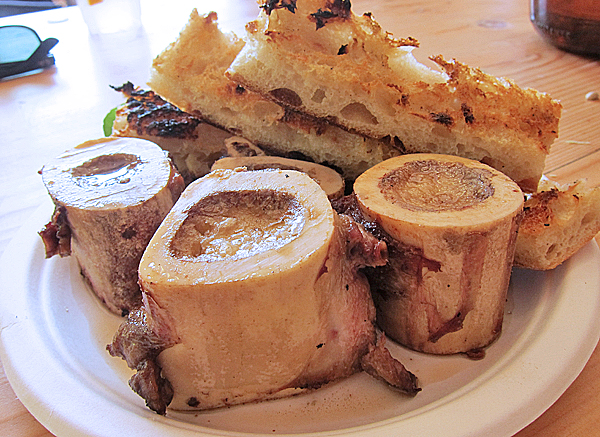
roast bone marrow

T ordered the Roasted Bone Marrow with Parsley Salad I had dismissed, which with its reputation couldn’t really have been anything but excellent – and it was. Still, I was glad I bypassed it as the hefty serving of four towering bone sections and two slices of sourdough would have signaled an early end to my meal. It really was lovely though, rich molten goodness piled on top of toasted sourdough with a good sprinkling of flavoured sea salt.

potted pork and rabbit

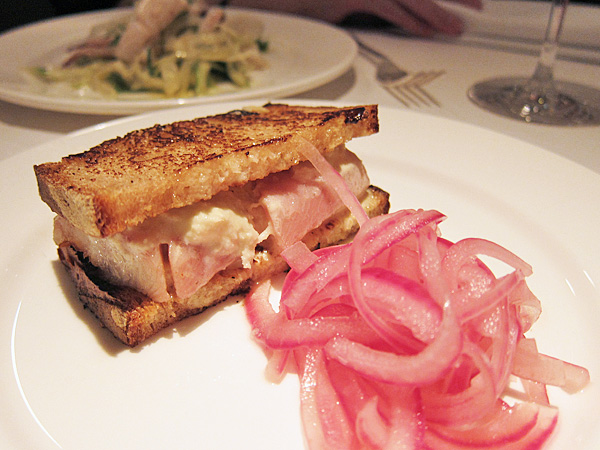
Of all the starters, my favourite had to be B’s tasty Potted Pork and Rabbit which had a lovely creamy consistency. Mixing the two meats together was a great idea as the mild rabbit mellowed out the porkiness, making what was essentially a rillette, a lot lighter than expected.

ox heart with beetroot

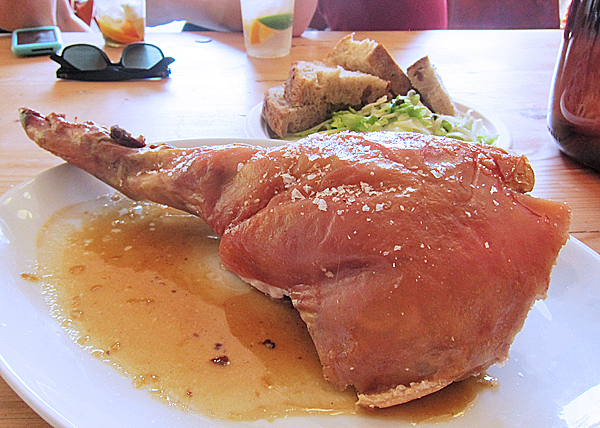
For mains we shared the ox heart, the pie special and a side of greens. The sliced Ox Heart was delicious, with a strong, robust beefy flavour and a slightly springy texture. It paired really well with the sweet roasted beetroot and punchy horseradish, and I could have easily wolfed down the lot. I guess it’s a matter of taste though as although B and I loved it, T was not as keen, likening it to an overly tough piece of steak.

chicken and tongue pie

The Chicken and Ox Tongue Pie was good too, with a surprising (but totally successful) combination of moist chicken meat and tender ox tongue, bathed in a creamy white wine sauce. We did however find the suet crust too stodgy (a puff pastry lid would have been preferrable), and ended up leaving most of of it, choosing to eat the filling with the leafy greens instead.

pear and treacle sponge

None of us really needed any more food after our mains but we went ahead and ordered pudding anyway – a Pear and Treacle Sponge to share with a side of Honey and Nutmeg Ice Cream. The warm airy sponge soaked in treacle was the perfect pudding for a cold day, and delicious eaten with spoonfuls of lightly spiced ice cream.

It was a great meal, but one we all agreed that we couldn’t (for the sake of our waistlines) repeat too frequently. B and I literally ate enough for two meals and skipped dinner altogether, in fact it’s just turned midnight as I type this and I’m still so full I can hardly move. Yes, it definitely was a good move not ordering the marrow.

St John (Farringdon) on Urbanspoon

apple tarte tatin

•November 8, 2009 • 7 Comments

apple tarte tatin

When it comes to autumnal desserts, there’s nothing better than a well executed tarte tatin – soft tart apples with deep chewy caramel and flaky buttery puff pastry, topped off with vanilla bean ice cream or crème fraîche. Last night I tried two tarte tatin recipes – the first was a bit of a disaster (hence the need for a second), calling for far too much butter causing the caramel to split immediately. I was a little skeptical about how the second would turn out but I was pleasantly surprised as it actually wasn’t half bad. I would however increase the caramel to apple ratio the next time round and dust the puff pastry with icing sugar before popping in the oven for a little extra sugar crunch on the base.

Apple Tarte Tatin
(adapted from Novelli’s Your Place or Mine)
serves 4

6-8 cox (pippin) apples (depending on size of pan)
1/2 cup caster sugar
2 tbsp water
2 tbsp butter, cubed
ready-rolled puff pastry

Preheat oven to 220°C (425°F).

Peel, core and quarter the apples. Set aside. Cut your puff pastry sheet into a circle about 2-3 cm larger than the circumference of the frying pan (or pie dish) you are using.

In a medium pan or circular pie dish (I used a crepe pan) melt the sugar and water on a medium heat, stirring until the sugar has melted and takes on a golden hue – take care not to burn it.

Once the caramel is ready take off heat and stir well to incorporate the butter. If the mixture splits at this point return the pan to a gentle heat and stir until combined.

Remove from heat and arrange the apple pieces in the pan, packing them in tightly.

Place the puff pastry sheet over the apples, tucking the edges in around the sides and leave to rest for 15-20 minutes (you can prepare the dessert up to this point, have dinner then pop it in the oven after your main).

Bake for 25-30 minutes until the puff pastry top is puffed up and golden. Remove from the oven, leave for a minute then flip over while still hot onto a serving plate (if you leave it upside down to cool it will stick to the pan and not turn out nicely).

Serve immediately with vanilla ice cream and/or crème fraîche.

Apples on Foodista

“sandwich day”

•November 7, 2009 • 9 Comments

30rock sandwich

This sandwich was inspired by the 30 Rock “Sandwich Day” episode where the TGS staff celebrate their annual Sandwich Day, when the teamsters treat the crew to “secret” sandwiches from a undisclosed Brooklyn deli. This was no fictional sandwich and was actually molded around the ones found in Hoboken’s Fiore’s deli, renowned for their fresh cow’s milk mozzarella, made in-house. Fiore’s famous sandwich consists of a long Italian loaf, Fiore’s own roast beef, their fresh mozzarella and gravy made from caramelised onions and beef drippings (no doubt what the “dipping sauce” that accompanied the 30 rock sandwiches was based on).

We made ours (in answer to Chickenless Kitchen’s 30 Rock TV dinner challenge – thanks CC, great theme!) with a lightly toasted ciabatta style baguette, lovely fresh organic mozzarella, rare roast beef from Baker and Spice and our own caramelised onion sauce served spooned over the beef, but also on the side to stay true to the dipping sauce depicted on the show. Not having ever tried the ones from Fiore’s I have no basis for comparison but these were very good indeed. Really good.

Roast Beef and Mozzarella Sandwiches with Caramelised Onion “Dipping” Sauce
serves 2

1 large baguette, halved and split lengthways
1 large fresh mozzarella (made with cow’s milk)
6 thin slices rare roast beef
1 large onion, sliced
2 tbsp unsalted butter
250ml (1 cup) beef stock
1 1/2 tsp sugar
1 tbsp worcestershire sauce
2 tsp corn flour

First make the sauce. Melt the butter in a small pan, then add the onions and sugar. Sauté on a low-medium heat until onions have browned, stirring frequently to prevent them from burning.

Once the onions are nicely caramelised add the beef stock and bring to a boil, let it cook for 2-3 minutes until reduced by half.

In a small bowl, blend the worcestershire sauce and corn flour well then pour into the pan and mix well. After a few minutes on medium heat the sauce will be ready – it should be thick and glossy. Set aside and keep warm.

Open up the baguette halves and line with thick slices of mozzarella. place under a hot grill until the cheese begins to melt and the bread is slightly toasted. remove and place over the roast beef, spoon on a generous helping of the caramelised onion sauce. Serve with the remaining sauce on the side. Enjoy!

Beef Roast on Foodista

lemongrass prawn skewers

•November 6, 2009 • 7 Comments

lemongrass prawn skewers

Cooking for one tonight so just put together something with what was in the fridge (not much). There were some prawns I picked up at Wholefoods on a whim, and a few stalks of lemongrass, a couple of limes and chillies (from last saturday’s tom yam soup). I made a Vietnamese inspired marinade for the prawns, skewered them on the lemongrass to impart extra flavour as they cooked, and griddled them on a hot pan. The prawns came out really juicy with a lovely balance – sweet, salty and tangy, and just a hint of heat from the chillies. Don’t worry if the edges burn a bit as the sugar cooks – it just adds to the flavour! Serve with steamed rice and veg, or as I had them – on their own with plenty of lime juice squeezed over.

Lemongrass Prawn Skewers
serves 2

12 large prawns, peeled
5 stalks lemongrass
1 small (birds eye) chilli
1 tbsp oyster sauce
2 tbsp fish sauce
1 tbsp lime juice
1/2 tbsp vegetable oil
2 cloves garlic, minced
1 tbsp honey
1 tbsp sugar
lime wedges (to serve)

Cut the chilli and 1 stalk of lemongrass finely and place in a bowl with the prawns. Add all other ingredients and mix well. Leave to marinate for 2-3 hours (or overnight).

When ready to cook, remove the prawns from the marinade and skewer onto the remaining lemongrass stalks – 3 prawns per stalk.

Heat a griddle pan on a high heat and cook the skewers, for 2-3 minutes on each side (depending on the size of your prawns) until coloured and cooked through. The prawns can also be grilled or barbecued if you prefer.

Serve immediately with a generous squeeze of lime juice.

Prawn on Foodista  Lemongrass on Foodista

lentil, pancetta and oregano soup

•November 5, 2009 • 7 Comments

pancetta, lentil and oregano soup

I’ve never been particularly fond of pulses – kidney beans, chickpeas and pinto beans just don’t do it for me. But over the last couple of years I’ve slowly taken to the lentil – delicate puy lentils, lovely with roasted fish and the more rustic brown lentils which are wonderful in soups, taking on all the flavours of their pot-mates. I came across this one day while flipping through Allegra McEvedy’s cookbook, and have made it numerous times since. It’s a real winner – wonderfully earthy and packed full of flavour, with a smoky sweetness from the pancetta. Totally satisfying and frugal to boot, if ever there was a reason to love the lentil, this soup is it.

Lentil, Pancetta and Oregano Soup
(adapted from the Leon cookbook)
serves 4

1 tbsp butter
3 tbsp olive oil
140g (5oz) pancetta, diced
2 carrots, finely chopped
1 1/2 sticks celery, finely chopped
3 bay leaves
1 tsp dried oregano
4 cloves garlic, sliced
1 tbsp tomato purée
1 tbsp red wine vinegar
140g (5oz) brown or green lentils
1 1/2 litre (3 cups) chicken stock

Heat the butter and olive oil in a large pot over a high flame, once hot add the pancetta and fry until crispy and golden. Add the chopped vegetables, then lower the heat slightly to gently cook until tender (about 12-15 minutes).

Once the vegetables have taken on some colour add the bay leaves, oregano and garlic, stir, and cook for another 5 minutes.

Add the vinegar, tomato paste and the lentils, making sure to give it all a good stir so the lentils are well combined with everything in the pot. Pour in the stock and bring to a boil, then turn the heat down and leave to simmer for 30 minutes.

Season with salt and pepper if desired (I find that I never need to as it’s so tasty as is). Serve in large bowls with some crusty bread, or ladled over a poached egg (which was what I did for lunch with the leftover soup the next day – awesome!).

Lentils on Foodista  Green Lentils on Foodista  Brown Lentils on Foodista